When the Market Bleeds, the Bets Get Bigger: What Bear Markets Do to Aussie Crypto Casino Players
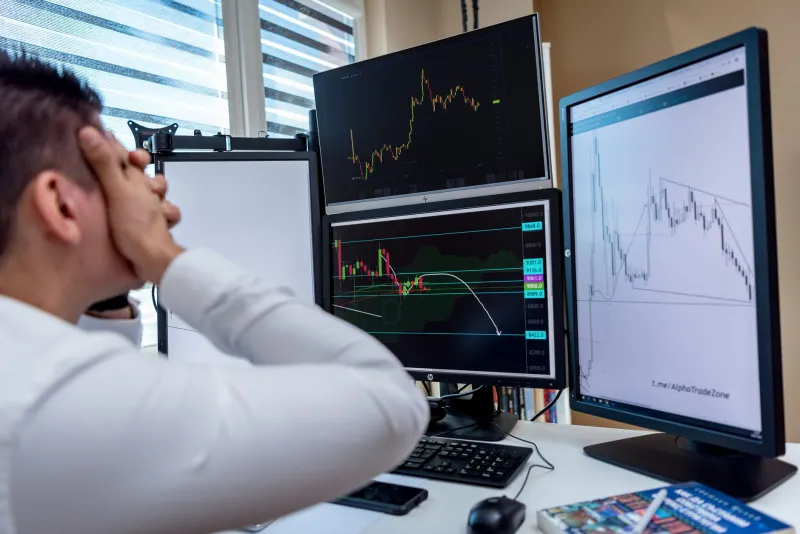
There's a pattern that shows up every time crypto takes a serious dive. Portfolios shrink. Social media fills up with doom posts. And quietly, behind the scenes, casino activity ticks upward. It's not a coincidence — it's human psychology doing exactly what it's wired to do under financial stress. For Aussie players who hold crypto and use it to gamble, that combination can get expensive fast.
Understanding why this happens is the first step to making sure it doesn't happen to you.
The Bear Market Mindset Shift Nobody Talks About
When Bitcoin drops 30% in a fortnight — which, let's be honest, it has done more than once — the average crypto holder doesn't just feel poorer. Their entire relationship with risk changes. And not in the direction you might hope.
Behavioural economists call it "loss aversion in reverse." Normally, people are more motivated to avoid losses than to chase gains. But once losses feel locked in — once your portfolio is already down significantly — some players mentally write off what they've already lost and start swinging harder to "get it back." The money already feels gone, so gambling with what's left can feel like a free shot at recovery.
This is sometimes called the "house money effect" in reverse: instead of gambling freely with winnings, players start gambling desperately with losses. It's a subtle but dangerous shift, and crypto's volatility supercharges it because the swings are so dramatic and so fast.
Why Crypto Makes This Worse Than Traditional Gambling
With fiat currency, your $500 deposit is worth $500 when you log in tomorrow. With crypto, that same deposit might be worth $380 — or $620. That constant fluctuation creates a kind of financial vertigo that messes with your ability to track what you're actually spending.
Here's a real scenario worth thinking about. Say you deposited 0.01 BTC into your crypto casino account back when Bitcoin was sitting at $80,000 AUD. That was $800 worth of funds. If BTC drops to $55,000, that same 0.01 BTC is now worth $550. You haven't played a single hand, and you're already "down" $250 in fiat terms.
For a lot of players, that psychological anchor — the original dollar value — becomes a target to chase. They're not just trying to win at the casino anymore. They're trying to claw back the market loss through the casino. That's a recipe for compounding a bad situation.
What the Patterns Actually Look Like
While comprehensive Australian-specific research on this exact behaviour is still emerging, the broader data from global crypto gambling platforms paints a pretty telling picture. During periods of sharp crypto decline, average session lengths tend to increase, bet sizes often escalate in the mid-to-late stages of sessions, and players are more likely to chase losses than they would be during stable or bull market conditions.
Anecdotally, crypto casino communities — Reddit threads, Discord servers, Telegram groups — light up during bear markets with stories that follow the same arc: "I was already down on my portfolio, so I figured a few spins couldn't make it worse." Except they usually do.
For Aussies specifically, there's an added layer. Crypto adoption in Australia is high relative to global averages, and a significant portion of those holders are also recreational gamblers. When both markets move against you at once, the temptation to use one to fix the other is genuinely difficult to resist.
Spotting the Warning Signs in Your Own Behaviour
The tricky part about bear market tilt is that it rarely feels like tilt. It feels like logic. "I need to recover these losses" sounds reasonable. "The market will bounce back but I can make some quick gains at the tables in the meantime" sounds like a plan. That's what makes it dangerous.
Some signs worth watching for:
Your session starts after checking your portfolio. If you're opening the casino app immediately after seeing a red screen on your crypto tracker, that's worth pausing on. You're not in a neutral headspace.
Your bet sizes are creeping up without a winning streak to justify it. If you started the session at $5 spins and you're now at $25 spins and you haven't had a big win, you're probably chasing.
You're thinking in fiat losses, not crypto units. Phrases like "I need to win $400 back" are a red flag when your casino account is denominated in BTC or ETH. You're conflating market losses with gambling losses, and they require completely different responses.
You're playing games you don't usually play. Higher volatility games — certain slots, high-limit live dealer tables — become more attractive when you're in a loss-recovery mindset. If you've switched from your usual games to something with bigger potential swings, check in with yourself.
Practical Ways to Keep Your Head During a Market Downturn
None of this means you have to stop playing when crypto dips. Plenty of players enjoy crypto casinos as pure entertainment, completely separate from their investment activity. The goal is to keep those two things genuinely separate — not just theoretically separate.
Set your casino budget in crypto units, not fiat. Decide you're comfortable spending 0.005 BTC on gaming this month, and stick to that regardless of what BTC is worth in dollars. This removes the temptation to "chase" a fiat figure that the market has already moved.
Implement a portfolio-check blackout period. Sounds odd, but it works. If you're planning a casino session, commit to not looking at your crypto holdings for at least an hour before you play. Give your emotional state time to settle.
Use loss limits religiously. Most reputable crypto casino platforms let you set daily or session loss limits. These are genuinely useful tools, not just regulatory box-ticking. A hard stop at a predetermined figure removes the in-the-moment decision-making that bear market psychology corrupts.
Talk about it. Australian gambling support services like Gambling Help Online (1800 858 858) are available around the clock. If you're finding that market downturns are consistently triggering heavier gambling sessions, that's worth discussing with someone who knows the space.
The Bottom Line
Bear markets are stressful. Watching holdings drop is genuinely unpleasant, and the urge to do something — anything — to feel back in control is completely understandable. The crypto casino is right there, promising the possibility of fast gains.
But the casino doesn't care what Bitcoin is doing. The house edge is the same in a bull market as it is in a bear market. The only thing that changes is your mental state — and if that mental state is already rattled by portfolio losses, you're walking into the session at a disadvantage that has nothing to do with the games themselves.
Play when you want to play. Set your limits before you start. And when the market is bleeding, maybe that's exactly the moment to be more conservative at the tables, not less.