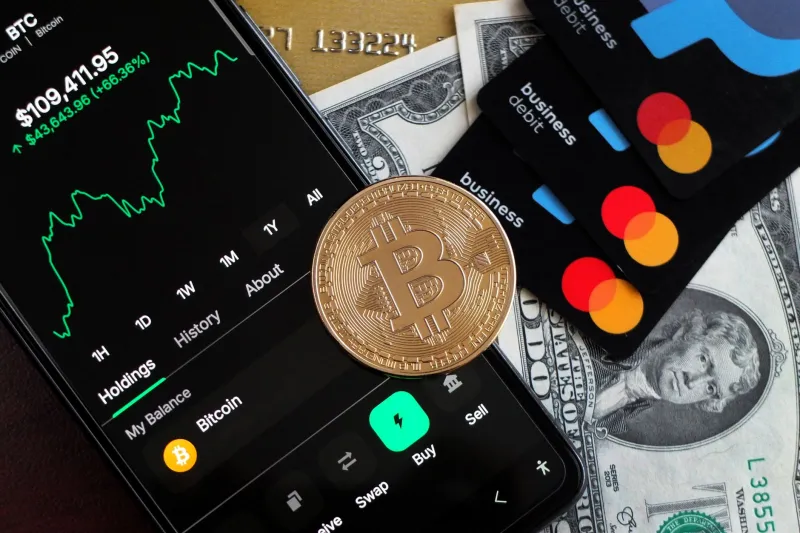
Why That Crypto Casino Price Gap Isn't the Free Money It Looks Like

There's a moment most crypto-savvy Aussie players have experienced at least once. You're watching Bitcoin or ETH prices across a couple of tabs — maybe Binance on one side, a crypto casino on the other — and you notice something. The price on the exchange looks slightly different to what the casino is treating your deposit as worth. Your brain fires up. Wait. Could I just... buy here, deposit there, withdraw, and pocket the difference?
It feels like finding a $50 note on the footpath. Clean, effortless, basically free.
It isn't. And the reason it isn't is actually a pretty useful lesson in how crypto casino economics work — one that could save you from burning through a stack of sats chasing a ghost.
What Arbitrage Actually Means (And Why It's Not New)
Arbitrage, at its core, is exploiting price differences for the same asset across different markets. In traditional finance, professional traders run algorithmic systems that execute these trades in milliseconds. The windows are razor-thin and close almost instantly.
In crypto, those same dynamics apply — but with a few extra layers of chaos thrown in. And when you add a casino platform into the mix, you're not just dealing with market inefficiency. You're dealing with platform conversion rates, withdrawal policies, network congestion, and the ATO lurking in the background.
The idea that a regular Aussie player can consistently exploit these gaps manually? That's the trap.
The Scenario That Looks Promising (But Isn't)
Let's walk through a realistic example. Say Bitcoin is sitting at $95,000 AUD on your exchange. You notice a crypto casino's live conversion rate is treating BTC as worth $95,800 AUD when you deposit — about 0.8% higher. On a $1,000 deposit, that's an $8 edge before you've placed a single bet.
Here's what actually happens when you try to capture it:
Step one: You buy BTC on the exchange. The listed price is $95,000, but the moment you place a market buy, slippage kicks in. Depending on your order size and the liquidity at that moment, you might actually pay $95,150 or more. There goes a chunk of your edge.
Step two: You initiate the transfer. Bitcoin network fees fluctuate wildly. During peak periods — which, if you've been around crypto long enough, you know can hit without much warning — you might be paying $15 to $30 AUD just to move the funds. That $8 edge is now deeply negative.
Step three: Confirmation time. Bitcoin doesn't settle instantly. Depending on the network, you're waiting anywhere from ten minutes to over an hour for enough confirmations. In that window, the price has moved. The casino's conversion rate has updated. The gap you spotted? Gone.
Step four: Withdrawal conditions. Most crypto casinos — including platforms designed with Aussie players in mind — have wagering requirements or minimum play conditions attached to deposits. You can't just deposit and immediately withdraw. By the time you've met those conditions, you've been exposed to house edge across however many hands or spins it took to clear them.
Add it all up and you haven't found free money. You've paid fees, absorbed price movement, and taken on casino risk just to break even at best.
The Stablecoin Version Isn't Much Better
Some players think the solution is to run this play using stablecoins — USDT or USDC, for example — where price volatility isn't a factor. The logic being: if both sides are pegged to the same value, you eliminate the timing risk.
The problem here is that stablecoin arbitrage between exchanges and casinos is even more picked-over. Professional bots are already running these routes. The spreads that exist are often there because of withdrawal limits, KYC friction, or platform-specific restrictions that make closing the loop impossible for a regular player.
And stablecoins still carry network fees. Tether on the Ethereum network during a busy period can cost you more than you'd ever extract from a price gap.
The ATO Angle Aussie Players Can't Ignore
Here's the part that doesn't get talked about enough. In Australia, every time you dispose of a cryptocurrency — including using it to make a deposit — it's a potential capital gains tax event. If you bought BTC at one price and deposited it at a higher price, the ATO considers that a gain, and it's taxable.
So even in the unlikely scenario where your arbitrage attempt technically worked on paper, you'd need to account for the tax liability on the gain from the disposal. Suddenly that 0.8% edge has a 15%, 25%, or higher tax implication depending on your income bracket and how long you held the asset.
Most players running these plays aren't keeping records clean enough to even know whether they came out ahead after tax. That's a compliance risk sitting quietly in the background.
Why the Illusion Persists
The reason this trap catches smart people isn't stupidity — it's the way crypto markets look inefficient even when they're not. Prices genuinely do differ across platforms. The gap is real in the screenshot. What's invisible at first glance is everything eating into it before you can close the trade.
There's also a psychological element. Crypto players are often already comfortable with complexity — wallets, gas fees, network selection, exchange accounts. That familiarity can breed overconfidence. I know how this works, I can navigate it. And you probably can navigate the mechanics. What's harder to navigate is the timing, the fees, and the fact that casino platforms are specifically designed so that money flows in more easily than it flows out.
What to Do Instead
If you're genuinely interested in getting more value from your crypto casino experience as an Aussie player, the better plays are less glamorous but more reliable:
- Use networks with lower fees. Depositing via Litecoin, Solana, or other low-fee chains instead of Ethereum or Bitcoin mainnet cuts your friction costs significantly.
- Time your deposits. Crypto network congestion follows patterns. Depositing during off-peak hours (often mid-week, lower-traffic periods) means cheaper transfers.
- Actually read bonus terms. A well-structured welcome bonus with fair wagering requirements is a genuine edge — not a massive one, but a real one. Arbitrage fantasies aren't.
- Keep records. If you're moving crypto in and out of casino platforms regularly, maintaining a transaction log makes tax time less painful and keeps you honest about whether you're actually ahead.
The Bottom Line
Arbitrage works brilliantly in theory and on spreadsheets. In practice, for a regular Aussie player trying to run it manually across a crypto casino and an exchange, the friction is almost always greater than the opportunity. Slippage, network fees, confirmation delays, withdrawal conditions, and tax obligations stack up fast.
The price gap you spotted? It's real. It's just not yours to take.